Professor Ntsebeza, from the best university - the University of Cape Town, gave a presentation on Mandela's position towards democracy. He described the two roots of Mandela's thoughts: liberal democracy and tribal democracy. The first one is the one the struggle was for: elections and direct representation. The second one relates to the way he grew up in his village: participative democracy, somewhat idealised according to Prof Ntsebeza. This tension is present in Mandela himself. The current developments in South Africa are also trying to find a balance or a way between the two. In many places, tribal authorities have not been dismantled. On another level, most decisions are taken according to liberal democracy. Interesting to hear all that coming from an academic.
Prof Ntsebeza is very much encouraged by the recent political events. There is the chance to have a robust discussion on politics and for serious multi-party democracy. This is why he is quite critical about Archbishop Desmond Tutu's stance that he would not vote in the next elections.

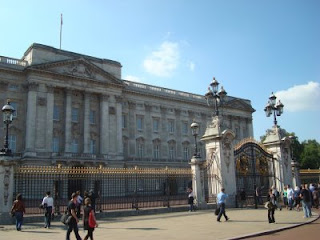
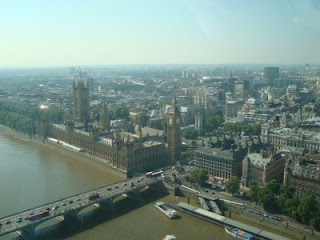
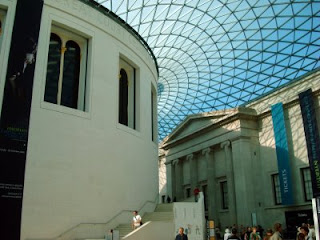 Back outdoors, we queued to get onto the London Eye. Beautiful views over London, including Westminster and Big Ben.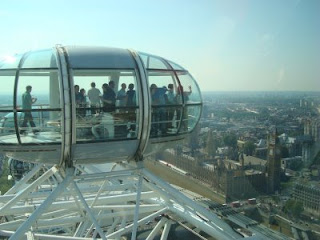
 On the final day, we went to the outskirts of the city, where the new neighbourhood of East London and Greenwich. We clearly get the sense that the country was proud that the sun never set on its Empire. One foot to the East of the world and the other to the West. But since then, the centre of the world has moved...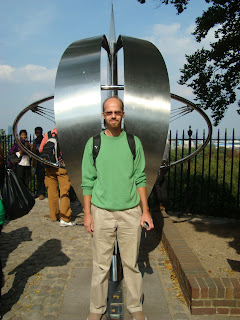
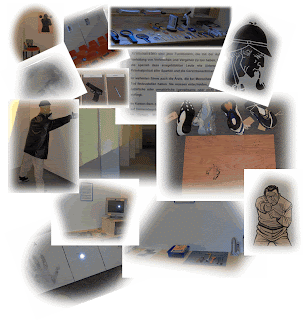
 The last question sounds: "is there a criminal in the house?" We visited the crime studio where we would play the investigators. It was both interesting and fun. There were around 14 cases to solve, thanks to several clues. Sounds easier than it was. The owner had all the experience to set up these cases, as he is a retired policeman.